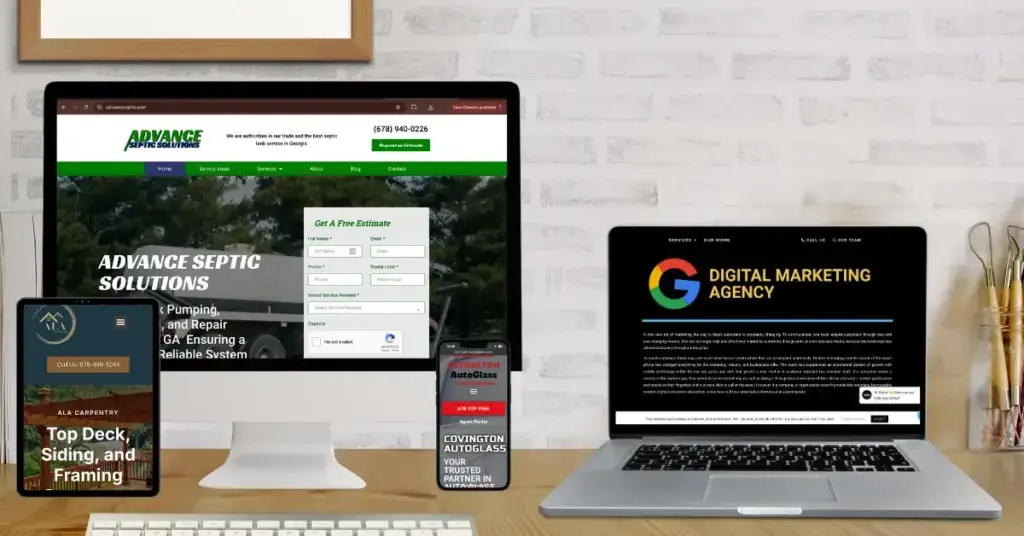

High-performance Google Ads campaigns built specifically for septic pumping, repair, inspection, and installation companies.
When homeowners search for septic services, they usually need help immediately. A backed-up tank, a failing drain field, or a real estate inspection can’t wait days for a response. These urgent searches create a powerful opportunity for septic contractors to capture high-intent customers at the exact moment they are ready to book service.
That’s where septic PPC campaigns come in.
With the right strategy, Google Ads for septic companies can generate a consistent flow of calls for pumping, repairs, inspections, and installations. Instead of waiting for long-term SEO rankings to build momentum, paid advertising allows your business to appear at the top of search results immediately.
But effective septic advertising isn’t just about running ads.
It requires:
When those elements work together, septic contractors can dramatically increase booked jobs while maintaining predictable marketing costs.
This page explains exactly how septic paid advertising works, why it performs so well for this industry, and how our campaigns are designed to generate measurable return on investment.
Few service industries benefit from paid search advertising as much as septic services.
The reason is simple: search intent.
When homeowners search for septic services, they are rarely browsing. They are usually facing a problem that requires immediate attention. That urgency creates some of the highest-converting search traffic in the contractor marketing space.
Here are the key factors that make septic PPC so effective.

Many septic searches happen during stressful situations.
Common search examples include:
In these situations, homeowners aren’t comparing dozens of companies. They are looking for the first qualified contractor who answers the phone.
Paid ads place your business directly in front of those searches.
Septic services are not impulse purchases or casual research topics.
People searching for septic pumping or repair usually:
This makes septic keywords extremely valuable for advertising because the traffic often converts quickly into booked jobs.
A large percentage of septic service searches occur on mobile devices.
Homeowners standing in their yard looking at a wet drain field or sewage backup typically grab their phone and search for help.
That’s why strong septic advertising strategies prioritize:
Generating phone calls is often more valuable than website form submissions in this industry.
Many septic companies rely almost entirely on word of mouth or organic search traffic. While referrals remain important, they don’t always provide consistent lead flow.
Paid advertising fills that gap by capturing demand that already exists in the market.
When someone searches for:
“septic pumping near me”
a properly optimized Google Ads campaign ensures your business appears at the top of the results.
Search engine optimization remains an important long-term strategy for septic contractors.
For example, strong rankings for septic marketing strategies like Septic SEO Services [/contractor-marketing/septic/seo/] can steadily generate organic traffic over time.
However, SEO takes time to build authority.
PPC offers something different:
immediate visibility and immediate calls.
When used together, SEO and paid advertising create a powerful marketing system:
This combination ensures septic companies never rely on a single lead source.
Septic PPC advertising refers to paid search campaigns specifically designed to generate leads for septic service companies.
Unlike generic PPC campaigns that target broad contractor keywords, septic PPC focuses on highly specific services and urgent homeowner needs.
These campaigns typically include several advertising formats.
Search ads appear at the top of Google results when someone searches for septic services.
Examples of common keywords include:
These searches represent some of the highest-intent traffic available for septic contractors.
Many septic contractors prefer phone calls over online forms.
Call-only ads allow homeowners to contact your business directly from the search results page. Instead of visiting a website, users tap the ad and call your office immediately.
This approach works especially well for emergency services.
Septic companies operate within defined service areas.
Effective septic paid advertising campaigns focus only on locations where your business actually operates. Targeting the right cities, counties, or service radius helps prevent wasted ad spend and ensures ads appear only to homeowners who can become customers.
A common mistake agencies make is running one generic ad campaign for all septic services.
High-performing campaigns separate services such as:
This structure improves ad relevance and increases conversion rates.
Not every visitor converts immediately.
Retargeting ads allow septic companies to stay visible to homeowners who previously visited the website. These campaigns reinforce trust and help bring potential customers back when they are ready to schedule service.
Running successful Google Ads for septic companies requires more than simply choosing keywords and launching ads.
Our approach follows a structured framework designed to maximize call volume, improve conversion rates, and track the true return on investment for every campaign.
The foundation of every successful septic PPC campaign is identifying the searches that indicate immediate service demand.
These are known as high-intent keywords.
Examples include:
These searches come from homeowners who already understand the service they need and are actively looking for a contractor.
By focusing on these keywords, campaigns attract visitors who are far more likely to call and schedule service.
In addition to targeting high-intent searches, strong campaigns also filter out irrelevant traffic using negative keywords. This prevents ads from appearing for searches that don’t represent real customer demand.
The goal is simple:
maximize qualified septic leads while minimizing wasted ad spend.
Septic companies typically offer multiple services, but each one has different search behavior and customer intent.
That’s why high-performing campaigns separate advertising by service category.
Typical campaign segmentation includes:
Each service receives its own ad groups, keywords, and messaging.
This structure improves several critical performance factors:
It also allows campaigns to direct visitors to the most relevant service pages, such as those developed through strong Septic Website Design [/contractor-marketing/septic/web-design/], ensuring visitors immediately see the service they searched for.
When ads match the user’s search intent and the landing page experience aligns with the service they need, conversion rates increase dramatically.
For most septic companies, phone calls are the primary way customers schedule service.
Homeowners dealing with a septic problem rarely want to fill out forms or wait for email responses. They want to talk to a technician immediately and confirm that help is on the way.
That’s why our septic PPC campaigns prioritize a call-first strategy.
Instead of focusing only on website clicks, campaigns are designed to generate direct phone calls from search results.
This approach typically includes several key ad features.
Call extensions allow your phone number to appear directly within the ad. On mobile devices, users can tap the number and connect with your business instantly.
This simple feature dramatically increases call volume for service-based businesses.
In urgent situations, even visiting a website can feel like an extra step.
Call-only ads eliminate that friction by allowing users to call your company directly from the ad itself. When someone taps the ad, it immediately initiates a phone call rather than sending them to a landing page.
For emergency septic repair or pumping services, this format can produce extremely high conversion rates.
Since most septic searches happen on smartphones, ad copy and campaign structure must be optimized for mobile behavior.
This includes:
When these elements work together, septic contractors capture customers exactly when they are searching for help.
Location extensions reinforce trust by showing the physical presence of your business in the service area.
They also improve visibility within local search results, helping ads stand out from competitors.
The goal of this call-first strategy is simple:
turn urgent search traffic into immediate phone calls.
Septic companies don’t operate nationwide. They serve specific counties, towns, and rural areas.
Running ads outside of those service areas wastes budget and generates leads that cannot be converted into jobs.
That’s why geographic targeting is one of the most important components of successful septic advertising campaigns.
Our campaigns focus heavily on service-area precision.
Ads are configured to appear only within defined geographic regions where your company actually operates.
This might include:
By narrowing the targeting area, campaigns focus budget only on locations that can realistically generate service calls.
Just as important as targeting the right areas is excluding the wrong ones.
Campaigns often exclude locations where:
These exclusions protect your ad budget from being spent on leads that cannot turn into profitable work.
Not all service areas perform the same.
Some cities generate higher-value jobs, while others may produce more frequent service calls.
Bid adjustments allow campaigns to increase visibility in high-performing areas while reducing spending in lower-value locations.
This level of geographic control helps septic contractors maintain consistent lead flow while protecting profitability.
Driving traffic to your website is only half of the equation.
If the landing page isn’t designed to convert visitors into phone calls or appointments, even the best Google Ads for septic companies will struggle to produce results.
That’s why landing page optimization plays a critical role in our campaign framework.
Instead of sending ad traffic to a generic homepage, campaigns direct visitors to highly relevant service pages.
For example:
This alignment between search intent, ad messaging, and landing page content dramatically increases conversion rates.
High-performing septic contractor websites are typically built using specialized Septic Website Design strategies that prioritize service clarity and fast load speeds.
Because many septic customers prefer phone communication, landing pages include prominent click-to-call buttons throughout the page.
These buttons allow visitors to call your business instantly without searching for a phone number.
Speed matters.
If a landing page takes too long to load, potential customers often return to search results and contact a competitor instead.
Optimized landing pages ensure fast load times on both desktop and mobile devices.
Homeowners want to know they are contacting a reputable company.
Effective landing pages highlight:
These elements build trust quickly and encourage visitors to call.
When landing pages are properly aligned with ad campaigns, septic leads increase significantly.
One of the biggest problems with most septic paid advertising campaigns is a lack of meaningful performance tracking.
Many agencies focus only on surface-level metrics such as:
While those metrics can be useful, they don’t tell septic contractors what really matters.
How many booked jobs did the campaign produce?
Our campaigns track performance at a much deeper level.
Dedicated call tracking numbers allow campaigns to measure exactly how many phone calls each ad generates.
This provides clear insight into which keywords and ads produce the most valuable leads.
Cost per lead measures how much advertising spend is required to generate a qualified inquiry.
For septic companies, this typically includes:
Understanding cost per lead allows campaigns to scale effectively.
Even more important than cost per lead is cost per booked job.
Some leads convert into scheduled service appointments, while others may simply request information.
By tracking which leads turn into actual jobs, campaigns can measure the true return on investment.
Many agencies fail to track this level of detail.
Our system integrates with specialized Septic Lead Generation [/contractor-marketing/septic/lead-generation/] tracking strategies to ensure septic contractors understand exactly how their marketing dollars translate into revenue.
When campaigns are optimized using this data, ad performance improves continuously over time.
Most septic companies have no clear visibility into how their marketing is actually performing. Ads run, money is spent, and leads come in—but the connection between marketing activity and real revenue is often unclear.
Our Contractor Marketing Audit examines your current advertising, website performance, lead flow, and conversion process to identify where opportunities exist to generate more calls and booked jobs.
In just a short review, you’ll gain clarity on what’s working, what’s being wasted, and how your marketing system can be improved.
Not all septic services generate leads in the same way.
Homeowners searching for septic pumping behave differently than those researching a new septic system installation or scheduling a real estate inspection. That’s why effective septic PPC campaigns segment advertising strategies based on the specific service being offered.
This segmentation allows ads to align directly with the searcher’s intent, which significantly improves both conversion rates and cost efficiency.
Septic pumping campaigns tend to generate the highest call volume because pumping is a recurring maintenance service.
Many homeowners search for pumping when:
Pumping campaigns typically focus on:
Since pumping services often repeat every few years, these campaigns also help build long-term customer relationships.
Repair-related searches are usually driven by urgent problems.
Homeowners dealing with a failing septic system may search for:
In these cases, messaging must emphasize:
Repair campaigns tend to generate some of the most valuable septic leads because the homeowner already knows they need professional help.
Installation projects are typically higher-ticket services that require more research and consultation.
Homeowners may search for:
Because these jobs involve significant investment, installation campaigns often encourage consultation requests and inspections rather than immediate emergency calls.
These campaigns often perform best when paired with a strong Septic Marketing Strategy that educates homeowners about system design, permitting, and long-term property value.
Septic inspections are frequently associated with real estate transactions.
When homeowners buy or sell property, septic inspections become part of the due diligence process.
Inspection campaigns often target searches such as:
These campaigns tend to generate scheduled appointments rather than emergency calls.
Segmenting services in this way allows Google Ads for septic companies to deliver highly relevant messaging that matches the homeowner’s situation.
One of the most common questions septic contractors ask is how much advertising will cost.
The reality is that septic paid advertising costs vary significantly depending on several factors.
In areas where multiple septic companies are actively advertising, keyword competition increases.
This can raise the cost per click for searches like:
However, higher competition often also indicates strong demand.
Urban and suburban regions typically generate more search traffic than rural areas.
Higher population density often means:
Campaign budgets must reflect these conditions.
Different services carry different advertising costs.
For example:
Understanding this balance helps septic companies allocate their marketing budgets effectively.
Some keywords attract more advertisers than others.
Emergency repair terms often have higher cost per click because contractors know those searches produce urgent customers.
However, when campaigns are structured properly, the cost per booked job still produces strong return on investment.
Transparency about advertising costs is essential. Unrealistic promises about “cheap leads” usually signal poorly optimized campaigns or misleading reporting.
Despite the strong potential of septic advertising, many campaigns fail to produce consistent results.
The reason usually isn’t the advertising platform itself.
The problem is poor strategy.
Here are the most common mistakes we see.
Without negative keywords, ads can appear for irrelevant searches that waste budget.
Examples include:
Filtering these searches ensures campaigns focus only on real customers.
Generic homepages rarely convert advertising traffic effectively.
Visitors searching for a specific service expect to land on a page that addresses their exact need.
That’s why strong campaigns direct traffic to dedicated service pages built through structured Septic Marketing Plans.
Many agencies run campaigns across overly large geographic areas.
This results in calls from homeowners outside the contractor’s service radius.
Precise location targeting prevents wasted leads and improves campaign efficiency.
If phone calls aren’t tracked, it becomes impossible to measure which ads are actually generating customers.
Without this data, campaigns cannot improve over time.
Clicks and impressions do not pay the bills.
Septic contractors need to know:
Campaigns must track real business outcomes, not vanity metrics.
When campaigns are structured properly, septic PPC can become one of the most reliable lead sources for septic contractors.
Typical improvements we see include:
Many contractors discover that once their campaigns are optimized, they can scale advertising gradually while maintaining consistent profitability.
For companies seeking long-term growth, working with a specialized Septic Marketing Agency [/contractor-marketing/septic/marketing-agency/] ensures campaigns remain optimized as competition and search behavior evolve.
Paid advertising also performs even better when supported by complementary strategies such as Septic Content Marketing [/contractor-marketing/septic/content-marketing/], which builds authority and organic search visibility over time.
When these systems work together, septic contractors gain a powerful and sustainable marketing engine.
Running ads is only one piece of a successful contractor marketing system. Lead capture, customer communication, follow-up, and reporting must all work together for marketing to consistently produce revenue.
MARCC connects your website, leads, calls, CRM, and automation into one streamlined system designed specifically for contractors.
If you want to understand how your marketing infrastructure can operate more efficiently, exploring the system behind the campaigns is the best place to start.
Yes. Because septic searches usually involve urgent service needs, Google Ads for septic companies often produce high conversion rates and immediate phone calls when campaigns are structured properly.
Budgets vary depending on service area size, competition, and growth goals. Most campaigns begin with a controlled budget and scale as performance data identifies profitable keywords.
Cost per lead varies by region and service type, but well-optimized campaigns typically reduce lead costs over time as data improves keyword targeting and ad performance.
Both strategies serve different purposes. SEO builds long-term visibility while PPC generates immediate calls. The most successful septic contractors use both strategies together.
Unlike SEO, which takes time to build rankings, septic PPC campaigns can begin generating calls as soon as ads are approved and launched.
If your septic company wants more predictable lead flow, the solution isn’t just running ads—it’s building a marketing system designed to generate and convert demand.
Our consulting team helps septic contractors design scalable strategies that combine advertising, SEO, conversion optimization, and automation into a unified growth plan.
If you’re ready to turn your marketing into a reliable revenue engine, the next step is to explore how strategic consulting can guide the process.